


Contacts vs. LASIK: What the Research Actually Says About Risk (Not What Social Media Says)
Posted by: Clear Vision Cataract & LASIK Center
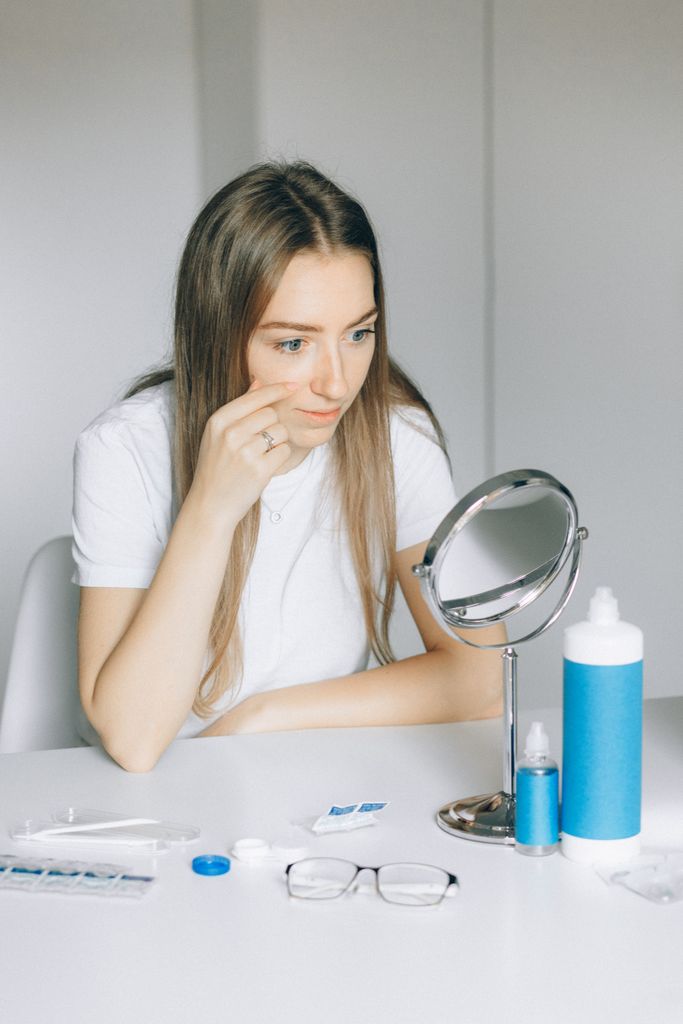
If you wear contacts, you’ve probably heard some version of this rule from your eye doctor: don’t swim, shower, or sleep in your lenses. Eye care providers often call it the “three S’s,” and it’s important advice.There is a video going around social media right now that is a perfect example of why this advice is enforced. A young woman unfortunately suffered Acanthamoeba keratitis, a rare, painful parasite from tap water that infected her eye after she showered while wearing her contact lenses.
Here is what I wish people knew more about: published research suggests that over a lifetime of wear, contact lenses carry a meaningfully higher risk of a vision-threatening infection than LASIK does. Not just a tiny difference, several studies put it at roughly three to four times higher.
This is something I want to talk more about, because it runs counter to almost everything the current cultural conversation around LASIK and other vision correction procedures assumes.
What the Data Actually Shows
A meta-analysis published in the Journal of Cataract & Refractive Surgery — pooling results across multiple studies of both contact lens wearers and LASIK patients — found that a year of extended-wear soft contact lens use was associated with roughly three times the rate of microbial keratitis (a serious corneal infection) compared to LASIK. Separately, a large-scale analysis from OHSU’s Casey Eye Institute — drawing on more than 16,000 soldiers and nearly 32,000 LASIK procedures — found that daily contact lens wear over 30 years carried a notably higher lifetime risk of vision-threatening infection than a single LASIK procedure, in the same three-to-four-times range other studies have cited.
The mechanism behind it is straightforward. LASIK’s risk is front-loaded and one-time, and with the proper surgeon taking care of you during and after your procedure and initial healing, you’re through it, and the risk is essentially behind you. Contact lens risk is the opposite — it’s ongoing and cumulative as long as you are wearing them. Every insertion, every removal, every night you forget to take them out or wash your hands when you do remember, adds another exposure to a risk that compounds year after year, decade after decade.
Why This Feels Backwards… And Kind of the Whole Point
You’re probably asking: “But Dr. V, if the data is this clear, why does LASIK still get painted as the ‘riskier’ choice on social media, while contacts feel like the safe, sensible default?”
It’s kind of like the same bias that makes people more nervous about flying than driving. Even though commercial air travel is statistically far safer per mile than driving a car. We drive constantly, without a second thought, so our brains file it as low-risk. Flying feels scarier precisely because it’s less frequent and less familiar, not because it’s actually more dangerous.
Contacts and LASIK are a similar pattern. Contacts feel safe because you put them in every single day without incident, and familiarity reads as safety, even when the data says otherwise. LASIK feels riskier because it’s one conscious, unfamiliar decision made a single time. But that’s exactly why the risk profile is flipped from how it feels: LASIK’s risk is concentrated into one (very well-studied) moment, while contact lens risk is quietly spread across thousands of ordinary days until, for a small percentage of long-term wearers, it isn’t.
Social media conversation around LASIK tends to amplify rare complication stories, which is understandable, since a bad outcome makes for a much more shareable post than “I wore my contacts safely for 20 years.” But that dynamic skews many people’s perception, and published research tells a more complete story than the algorithm does.
The Three S’s Still Matter
None of this means contacts are inherently unsafe for most wearers, and millions of people wear them for decades without incident. But the three S’s exist because they mark the moments where risk spikes the most:
Swimming — pools, lakes, and hot tubs carry organisms, including Acanthamoeba, that soft lenses can absorb like a sponge. This is likely the exact kind of story you’ve seen circulating on social media — and it’s a real risk, not exaggerated.
Showering — the CDC specifically warns against it, since tap water isn’t sterile and carries similar risks to swimming or lake water.
Sleeping — even a short nap in lenses not approved for overnight wear cuts oxygen to the cornea and is one of the most consistently cited risk factors for infection.
Good habits lower the risk considerably:
- Never rinse or store lenses in water — always use fresh solution
- Replace lenses on your prescribed schedule, not “when they start to feel off”
- Remove lenses before swimming, showering, or sleeping — no exceptions
- Consider prescription swim goggles if you need correction in the water
If You’re Ready to Remove the Risk Entirely
For patients who’ve looked at the actual data and decided the ongoing risk and daily hassle of contacts isn’t worth it anymore, LASIK and EVO ICL offer a way to opt out of that risk altogether, not just manage it better.
Finding a surgeon with a multi-step process to ensure you are the best candidate for any type of lens will help you get the best results possible.
Our team at Rochester and Bloomfield Hills can walk you through whether you’re a candidate and what your options look like.
Call 248-215-0326 to schedule a consultation.