
Refractive Lens Exchange · Rochester Hills, Michigan
See near and far again — without the readers.
Refractive lens exchange (RLE) replaces the eye’s aging natural lens with an advanced technology lens — for adults 45 and over who depend on readers or progressives, or who’ve been told they aren’t LASIK candidates. One procedure corrects near, distance and astigmatism, and you’ll never develop a cataract.
Complimentary consultation. No obligation. No pressure. Just honest answers about your vision.
Serving Rochester Hills, Troy & Bloomfield Hills — and patients from across Metro Detroit · 1135 W University Dr, Rochester, MI 48307
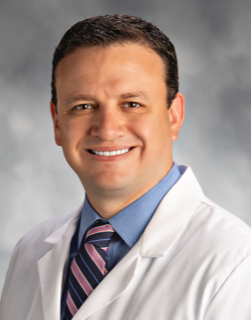
Your lens surgeon
Joshua Vrabec, MD
For more than 25 years, Dr. Vrabec has helped patients see clearly by demanding the very best from himself and his team. Every surgery is performed by Dr. Vrabec, supported by our optometric team who help co-manage your care before and after — guided by one principle: the right procedure and the right lens for the right patient, or no procedure at all.
- Castle Connolly Top Doctor
- Board-Certified Ophthalmologist
- Cataract & Lens-Replacement Specialist
- Fellowship-Trained Refractive Surgeon
- Private, Accredited On-Site Surgery Suite
“Care and friendliness are excellent! I am back to 20/20 at the age of 73 and loving it! Thank you Dr. Vrabec and staff!”
“YOU MUST COME HERE for vision needs! … Within a week, I went from blinding vision to cataract removal and intraocular lens placement that has resulted in 20/20 vision. Don’t hesitate to make an appointment. 10 stars!”
“I could not be happier or more excited about the results of my cataract surgery. Dr. Vrabec listened very carefully to my needs. We had an extra consult just to make sure that we were getting the correct lens for me, and he was professional and kind through the entire experience.”
From our verified Google reviews. Our complication rates, side by side with national benchmarks, are published here.
Why patients choose Clear Vision Center
One procedure. The lens you choose makes the difference.
Refractive lens exchange — also called custom lens replacement or clear lens exchange — is the same operation as modern cataract surgery, performed before a cataract has formed. Around your mid-40s the eye’s natural lens stops flexing; that’s why reading got harder, and it only progresses from there. RLE removes that aging lens and replaces it with a permanent advanced lens chosen for your eyes, correcting nearsightedness, farsightedness, astigmatism and presbyopia (the age-related loss of near focus): a multifocal lens such as the Bausch + Lomb Envy™ or TECNIS Odyssey™ for the widest everyday range, an extended-depth-of-focus (EDOF) lens such as TECNIS PureSee™ for smooth range with a low-glare profile, or the Light Adjustable Lens, which we fine-tune after surgery. Astigmatism is corrected in the same procedure with toric lens versions. At your evaluation, we match the lens to your eyes and how you live.
- We recommend the right lens for your eyes and lifestyle — never pushed
- Reduce your dependence on glasses across distance, mid-range, and near tasks* — including astigmatism correction
- Rich color and crisp contrast, restored with advanced-lens technology
- One gentle procedure that corrects your vision — and means you’ll never develop a cataract
*Near vision depends on the lens technology you choose — advanced multifocal and EDOF lenses provide the most everyday near range.
The Clear Vision Way
Progressives manage the symptom. Lens exchange fixes the source.
Readers, progressives, and monovision contacts all work around an aging lens that will keep changing — and eventually cloud into a cataract. Refractive lens exchange replaces it now, on your schedule, with an advanced lens chosen for how you live. Clear Vision Center is a dedicated vision-correction practice: we measure precisely, match the right lens to your eyes, and focus on the vision you’ll live with every day — distance, dashboard, and reading.
Technology most offices don’t have
A full range of advanced lens options, paired with precise diagnostic measurement, lets us match the right lens to your eyes — not a one-size-fits-all default. In surgery, Zeiss Callisto® laser guidance aligns your lens with precision — no manual ink markings.
A team trained for vision correction
Our specialized staff does this every day — guiding you through lens choices, measurements, and what life looks like afterward, so you make a confident, informed decision.
A cataract surgeon known for advanced lenses
Refractive lens exchange is the same operation as modern cataract surgery — the procedure Dr. Vrabec performs more than 1,000 times a year. 25+ years of advanced lenses, one principle: the right procedure and the right lens for the right patient — or none at all.
Office-based surgery, not a hospital
Your procedure takes place in our private, accredited on-site surgery suite — calmer, more personal, and built entirely around eye care. No hospital, no assembly line.
Your lens options
Advanced lenses, matched to how you live
The lens is the procedure — it decides how much of your day stays in focus. We offer the full range, and your evaluation determines which fits your eyes.
Multifocal lenses
Bausch + Lomb Envy™ · TECNIS Odyssey™
The widest everyday range — distance, dashboard, and reading — with the least dependence on glasses. The choice for patients who want to leave readers behind. Multifocal vs. Light Adjustable Lens →
Extended depth of focus (EDOF)
TECNIS PureSee™
Smooth, continuous focus from distance through arm’s length with a low-glare profile — a popular fit for frequent night drivers. Why PureSee is different →
Light Adjustable Lens
RxSight® LAL
The only lens whose prescription is fine-tuned after surgery — once your eyes have healed, we dial in your vision with painless light treatments until it’s right. How the Light Adjustable Lens works →
Astigmatism correction (toric)
Available across lens types
Most advanced lenses come in toric versions, so astigmatism is corrected in the same procedure — no separate step, nothing left half-fixed. Astigmatism correction options →
The cost of staying in glasses
What a lifetime of glasses really costs
Without vision correction, glasses for distance and reading are an ongoing expense for the rest of your life. An advanced lens is a one-time investment in a fuller range of vision.
Estimates only, for illustration. Advanced-lens pricing is confirmed at your eye evaluation; ask about flexible financing and HSA/FSA eligibility.
That’s money spent renting clear vision year after year. An advanced lens is a one-time step toward seeing across the full range — and reaching for glasses far less.
Find where you fitSimple & reassuring
Your path to a full range of vision
Complimentary eye evaluation
A thorough evaluation of your eyes, free of charge — detailed measurements and a conversation about your daily life (driving, screens, reading) to confirm which lens fits your eyes.
Your personalized lens plan
Dr. Vrabec reviews your options and recommends the lens that fits your eyes and your goals. No pressure — the right choice for you, clearly explained.
A quick, gentle procedure
Your lens procedure is performed in our private, accredited on-site suite, one eye at a time, with numbing drops and relaxing medication — no IVs. Most patients are back to everyday life quickly.
Find where you fit
See where you fit — in 60 seconds
Candidacy is confirmed only at your evaluation. If RLE isn’t the right procedure for you, we’ll tell you — and tell you what is.
Good to know
Refractive lens exchange questions, answered
What is refractive lens exchange — and is it the same as custom lens replacement?
Yes. Refractive lens exchange (RLE), custom lens replacement (CLR) and clear lens exchange (CLE) are the same procedure: the eye’s natural lens — the one that stopped flexing in your 40s and made reading harder — is removed and replaced with a permanent advanced technology lens. Clear Vision Center uses the name refractive lens exchange.
Is RLE the same as cataract surgery?
The surgical steps are identical. The difference is timing: cataract surgery removes a lens that has already turned cloudy, while RLE replaces a lens that still looks clear but no longer focuses well. Because the lens has been replaced, you can never develop a cataract afterward.
Refractive lens exchange vs. LASIK — which is right for me?
LASIK reshapes the front surface of the eye with a laser and works best for younger patients. After 45, it cannot fully correct presbyopia without a compromise such as monovision. RLE replaces the lens inside the eye, which is where presbyopia comes from, and it also means you’ll never need cataract surgery.
| Refractive lens exchange | LASIK / SMILE | EVO ICL | |
|---|---|---|---|
| Best age range | 45 and over | 18–45, stable prescription | 21–45, moderate to high nearsightedness |
| What it treats | Near, distance, astigmatism and presbyopia | Distance and astigmatism | Distance and astigmatism |
| Where it works | Replaces the lens inside the eye | Reshapes the cornea with a laser | Adds a lens in front of the natural lens |
| Future cataract surgery? | Never needed — the lens is already replaced | Still needed later in life | Still needed later in life |
| Time in the procedure room | 10–15 minutes per eye | Under 15 minutes total | 10–15 minutes per eye |
After 45, LASIK can’t fully fix presbyopia without a compromise such as monovision. RLE treats the cause — the aging lens. Vision correction over 40: LASIK vs. RLE vs. EVO ICL →
Can I have RLE if I’m under 45?
Sometimes. Patients under 45 who are not candidates for LASIK, SMILE, PRK or the EVO ICL — usually because of a high farsighted prescription or early presbyopia — may be good candidates. Dr. Vrabec walks through the trade-offs with you at your consultation.
Will I still need glasses?
With an advanced multifocal or extended-depth lens, most patients become far less dependent on glasses for driving, television, their phone, menus and the computer. For the smallest print in dim light you may still want light readers. Your lens choice sets the range, and we go through it together.
Does RLE hurt, and how long is recovery?
No. The procedure takes 10–15 minutes per eye and is done with numbing drops and light sedation — no needles around the eye, no hospital. Most patients see noticeably better the next morning and return to normal activities within two days; dryness or rings around lights can occur early and settle over the first weeks.
How much does refractive lens exchange cost?
RLE is an elective, private-pay procedure. The price depends on the lens you choose and whether astigmatism correction is needed, and it includes the surgery, the lens, your post-operative visits and — with an advanced lens package — any enhancement. We give you an exact, all-in figure at your consultation, and 0% financing is available through Alphaeon Credit for qualified patients.
Does insurance cover it?
No — unless a visually significant cataract is present, in which case the cataract surgery itself may be covered and you pay for the advanced lens. We check this at your evaluation.
What if my vision isn’t right after surgery?
About 3% of our patients benefit from a follow-up laser enhancement. With any advanced lens or astigmatism-correction package, that enhancement is included at no extra cost.
Will I ever need cataract surgery?
No. RLE removes the natural lens, so a cataract cannot form. Years later, some patients develop a thin film behind the new lens (posterior capsule opacification); it is cleared in minutes with a painless office laser.
Take the first step
Find out if refractive lens exchange is right for you
See where you fit in about 60 seconds, or call to speak with our team. Candidacy is confirmed at your first visit — a comprehensive evaluation of your eyes, free of charge. No pressure to proceed.
Medically reviewed by Joshua Vrabec, MD, board-certified ophthalmologist · Updated October 2026 · Clear Vision Center, Rochester and Bloomfield Hills, Michigan